
Warning signage might seem like a straightforward matter — a bright colour here, a bold symbol there — yet its impact on everyday safety is profound. Across construction sites, public roads, and industrial workplaces, well-designed warning signs serve as silent guardians, guiding behaviour and preventing harm before it occurs. Understanding how these signs work in practice reveals just how critical they truly are.
At a glance
- Warning signs act as essential, proactive safety tools that prevent accidents by guiding human behavior in high-risk environments.
- In industrial settings, layering floor-level and eye-height signage significantly reduces the risk of collisions between heavy machinery and pedestrians.
- Effective road safety relies on high-contrast, standardized signage that is free from obstructions to ensure drivers and pedestrians can make informed decisions.
- The effectiveness of warning signs is built upon the three foundations of high visibility, immediate clarity, and strict regulatory compliance.
- Regular audits and maintenance schedules are necessary to prevent the degradation of signage, ensuring it remains visible and relevant over time.
- Successful signage strategies require risk assessments to tailor communications to specific environments, audiences, and hazard levels.
Real-world scenarios where warning signage prevented accidents
Construction Sites and Industrial Workplaces: Lessons Learnt from Near-Misses
In environments where heavy machinery, elevated platforms, and hazardous materials converge, the stakes of inadequate signage are extraordinarily high. Construction sites and industrial workplaces are among the most demanding contexts for warning signage, where a missed signal can have severe consequences. Near-miss incident reviews consistently highlight the same pattern: where clear, well-positioned signs were absent or poorly maintained, workers were far more likely to enter dangerous zones inadvertently.
Consider the scenario of a warehouse where forklift traffic intersects with pedestrian walkways. Without prominent floor-level and eye-height warning signs marking these crossing points, workers on foot may step into the path of oncoming vehicles without realising the risk. Facilities that have implemented layered signage strategies — combining overhead alerts with ground markings — report a meaningful reduction in such incidents. The lesson is consistent: proactive signage shapes behaviour before an accident can unfold, rather than merely documenting one after the fact.
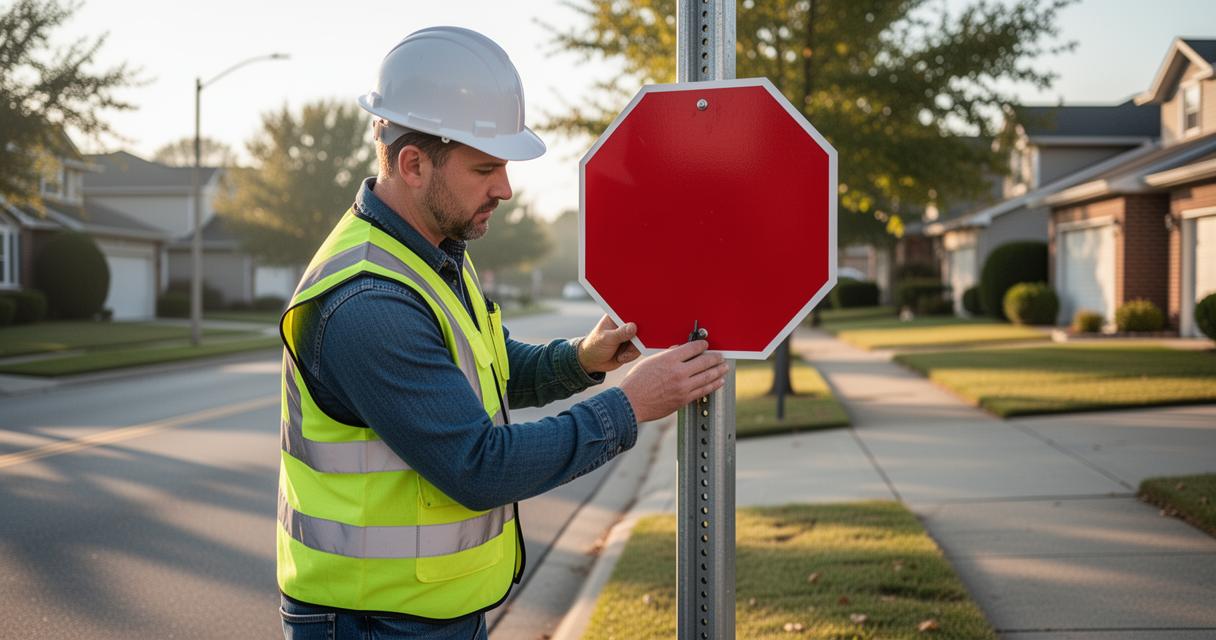
Public Spaces and Road Safety: How Clear Signage Shapes Pedestrian and Driver Behaviour
Beyond the industrial setting, warning signs in public spaces play an equally vital role. Road safety depends heavily on the clarity and placement of signage, from hazard warnings on sharp bends to pedestrian crossing alerts in busy town centres. When signs are faded, obstructed by foliage, or positioned at awkward angles, drivers and pedestrians alike are left without the information they need to make safe decisions.
Urban planners and road safety authorities have long recognised that the design of a sign is inseparable from its effectiveness. A warning that blends into its surroundings or uses unclear symbols fails at its most fundamental task. Studies in road safety have shown that high-contrast, standardised signage significantly improves driver response times and reduces collision rates at hazard points. In pedestrian zones, legible and strategically placed signs direct foot traffic away from danger with minimal friction.
Best Practices in Warning Signage Design and Placement

Visibility, Clarity and Compliance: The Foundations of Effective Warning Signs
Effective warning signage rests on three interconnected pillars: visibility, clarity, and regulatory compliance. A sign must first be seen — which requires careful attention to size, colour contrast, and placement relative to the viewer’s natural line of sight. It must then be understood instantly, using universally recognised symbols and concise language. Finally, it must meet applicable safety standards to ensure consistency across environments and industries.
Organisations that take signage seriously invest in regular audits of their existing installations. Over time, signs fade, become obscured, or are rendered irrelevant by changes to the surrounding environment. A proactive maintenance schedule ensures that every sign continues to serve its intended purpose. Equally important is the use of materials suited to the environment — weatherproof finishes for outdoor use, anti-glare surfaces for areas with strong artificial lighting, and reflective coatings for low-light conditions.

Adapting Signage Strategies to Different Environments and Risk Levels
No single approach to warning signage suits every context. A chemical plant, a children’s playground, and a motorway service station each present distinct hazards and audiences, demanding tailored solutions. Risk assessment is therefore an essential first step in any signage strategy, identifying the specific dangers present and the characteristics of those likely to encounter them.
In high-risk industrial environments, signage is often supplemented with colour-coded systems and multilingual text to accommodate diverse workforces. In public-facing spaces, pictograms and simple language ensure that warnings are accessible to people of all ages and literacy levels. The key principle throughout is that warning signs must communicate clearly and immediately, meeting the viewer where they are rather than demanding effort or prior knowledge to interpret them. When this standard is met consistently, signage becomes one of the most cost-effective tools in any safety strategy.